Industrial water recovery field guide
Follow the water, heat and residual materials through a process before choosing equipment. These planning notes outline questions for an initial engineering discussion.
Evaporation with MVR
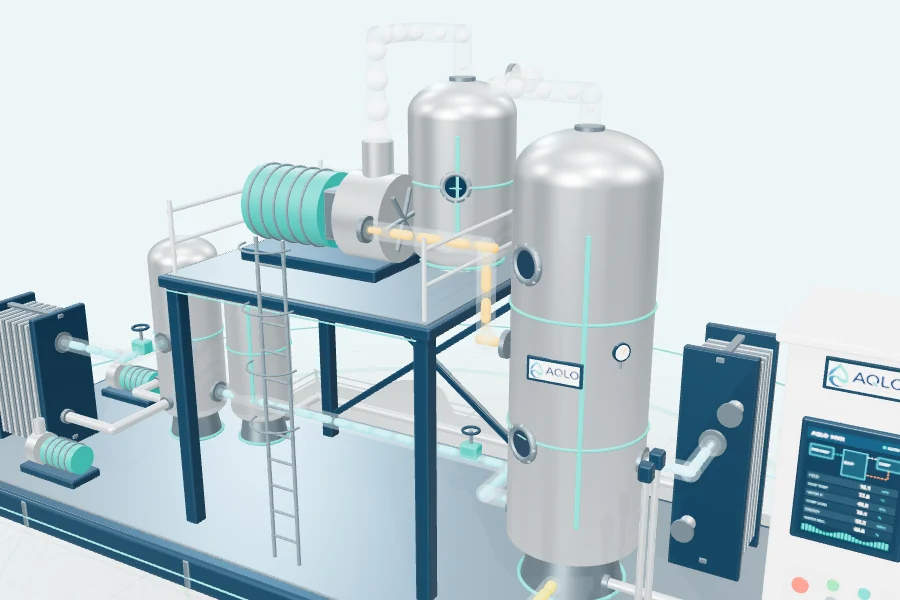
Mechanical vapor recompression reuses vapor from evaporation as a heat source. Evaluate the two resulting streams together: the condensate may have a route back to the plant, while the concentrate still needs a destination.
Bring feed composition, flow variability and the water quality required at the point of reuse.
Drying concentrated liquids
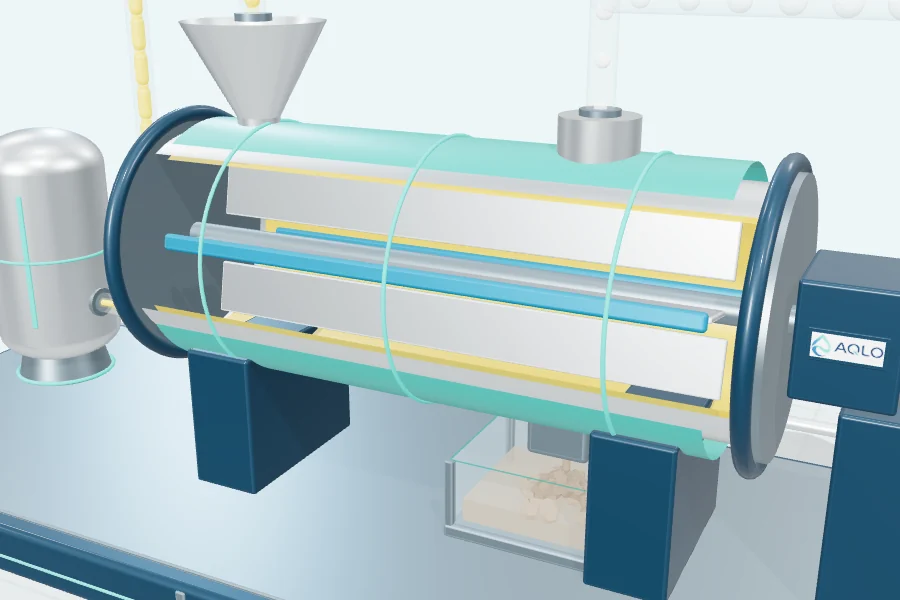
A scraped-surface dryer can be considered after evaporation when the concentrate is difficult to store or transport. Residual stickiness and the receiving facility’s requirements shape the evaluation.
Record batch mass, solids content and the condition in which the receiving facility accepts residue.
Recovering process heat
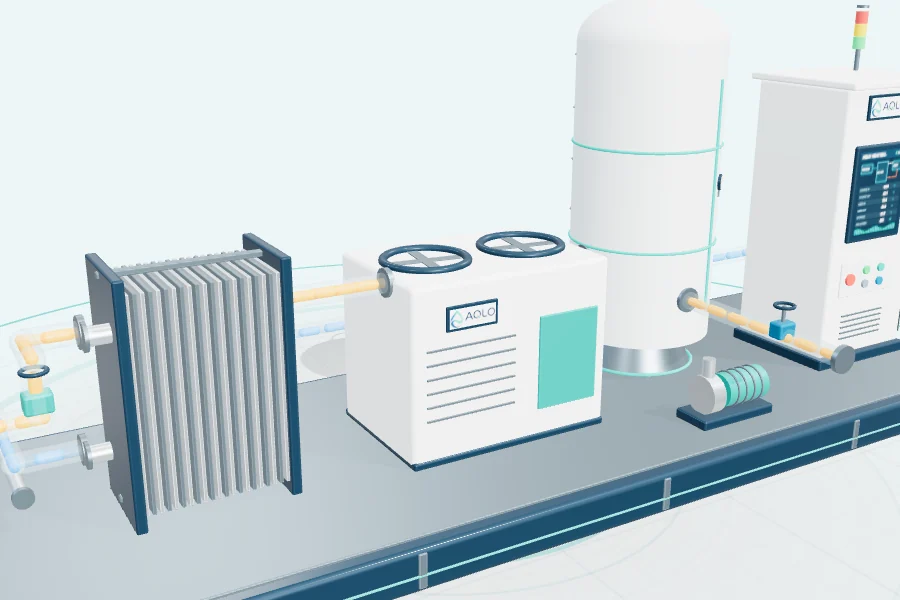
Match a source of surplus heat to a need for heating elsewhere in the plant. Temperature and flow matter, but so does timing: two lines on different shifts may need heat storage.
Compare operating hours and temperatures at both ends.
Recovering organic solvents
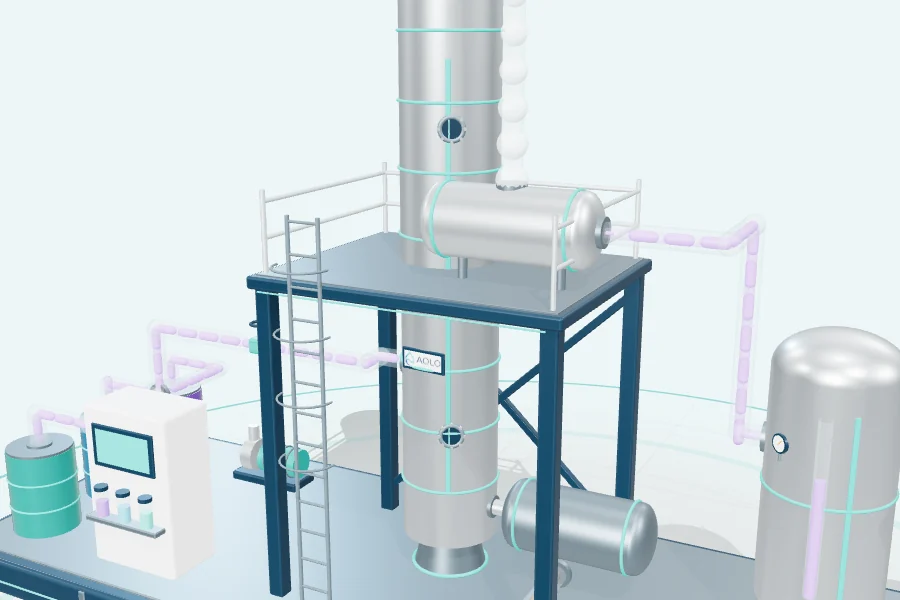
The next process sets the target for recovered solvent quality. Keep separate batches identifiable so that composition and water content can be assessed before selecting a separation method.
Gather safety data sheets, batch volumes and the receiving process specification.
Wastewater from Turkey-red oil use
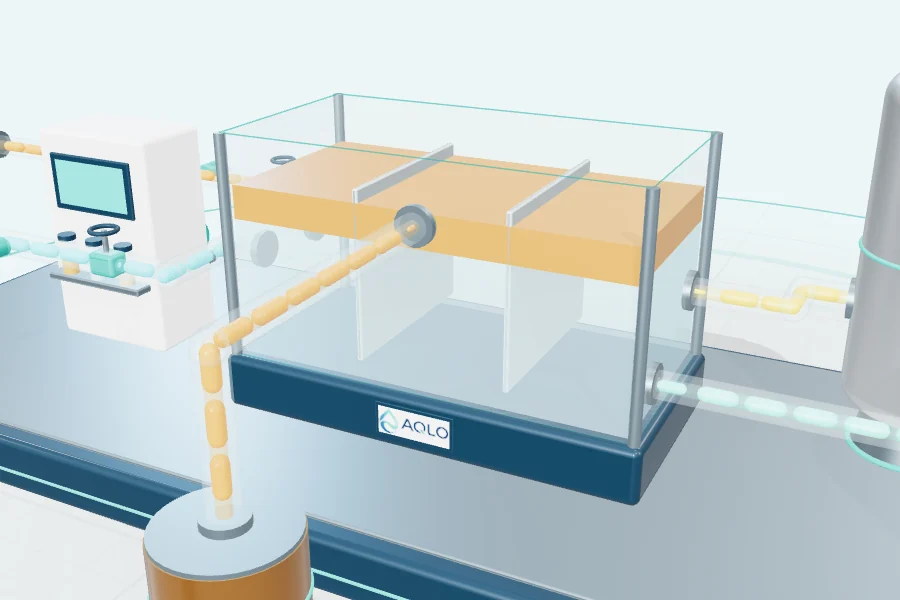
Separate spent process baths from equipment wash water when characterizing wastewater containing Turkey-red oil. The oil formulation and stability of the emulsion influence the separation options.
Identify the oil by its product sheet and take representative samples from each source.
Controlling scaling and fouling
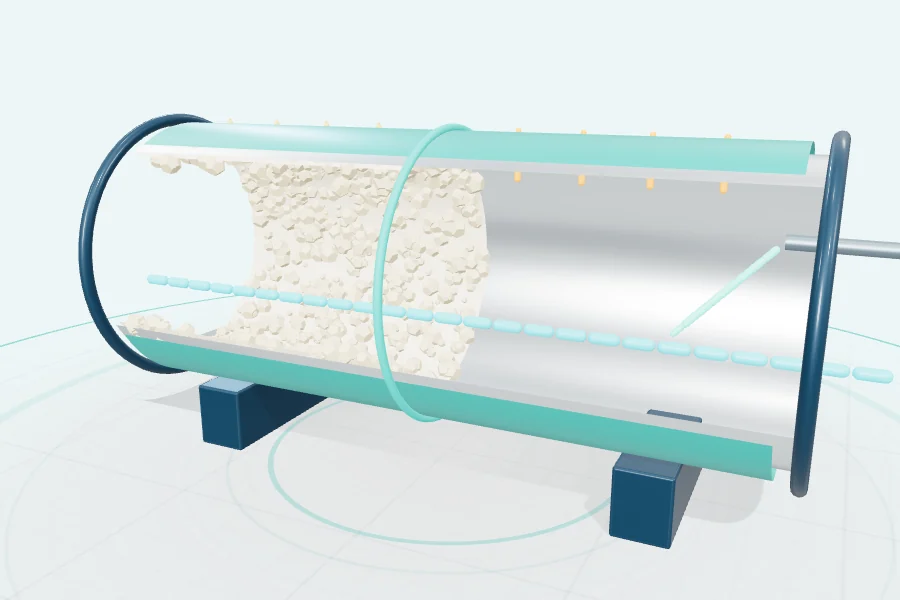
Heat-transfer surfaces in evaporators and dryers lose performance when hardness, silica, sulfate or organics deposit on them. Pretreatment, pH control, operating temperature and a planned cleaning routine all influence how long a unit runs between cleanings.
Provide hardness, silica, sulfate and organic content of the feed, and any history of scaling in existing equipment.
Planning toward zero liquid discharge
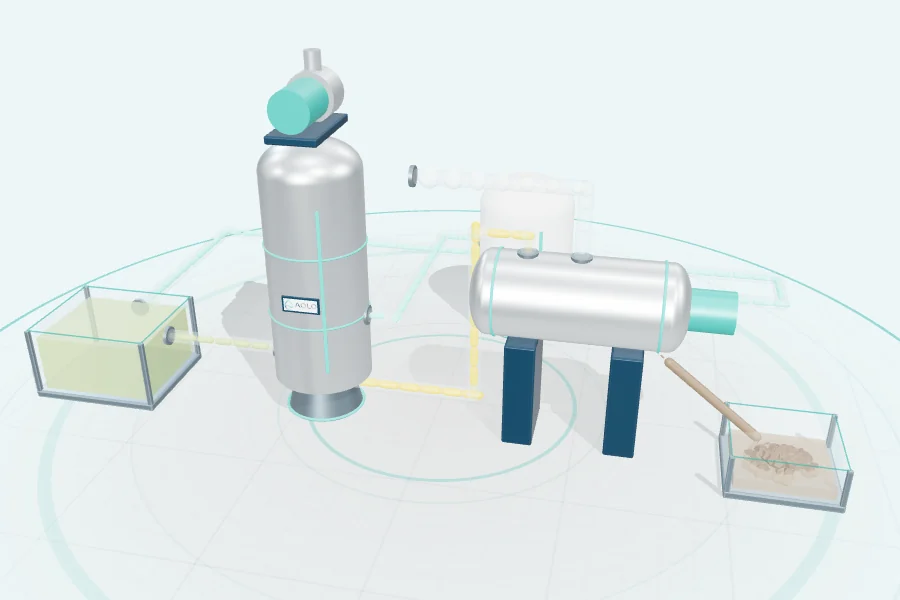
Zero liquid discharge combines recovery of reusable water with reduction of what remains to a solid or a small volume. The plan works stream by stream: which can be reused directly, which need concentration, and where the final residue goes.
List every liquid stream leaving the site, its volume and its current destination.
Choosing an evaporation approach
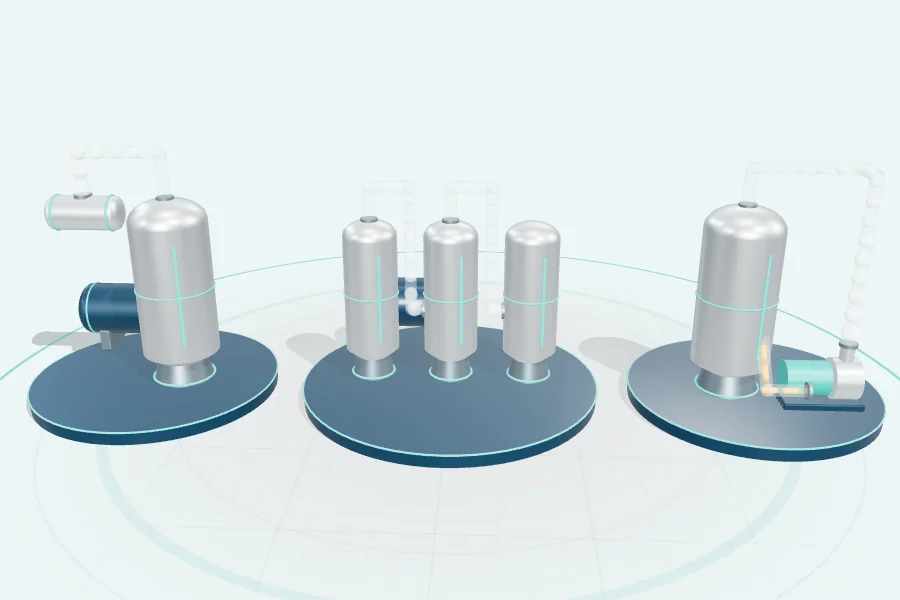
Mechanical vapor recompression, multiple-effect and single-effect evaporation differ mainly in how they supply heat. Boiling one tonne of room-temperature water by simple distillation takes roughly 700 kWh; MVR reuses the vapor's latent heat and can recover up to 90% of that energy. Electricity price, available steam, waste heat on site and operating hours shape which approach fits.
Share your electricity and steam costs, available waste heat and expected operating hours.
Mobile, rental or purchase
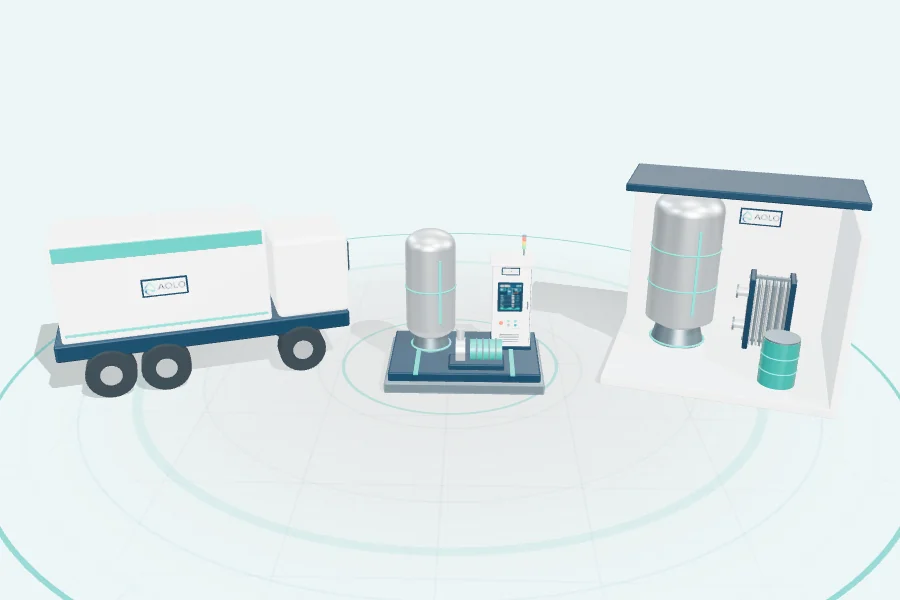
Volume, frequency and how long the need will last help decide whether intermittent on-site treatment, a rental unit or an owned system makes most sense. A trial period can confirm treatment results before a long-term commitment.
Note how often the stream is produced, how much each time, and how long the need is expected to last.
Start with your water.
Tell us where the water comes from, how much there is and where it should go next. We will use your brief to frame the first engineering discussion.