Equipment
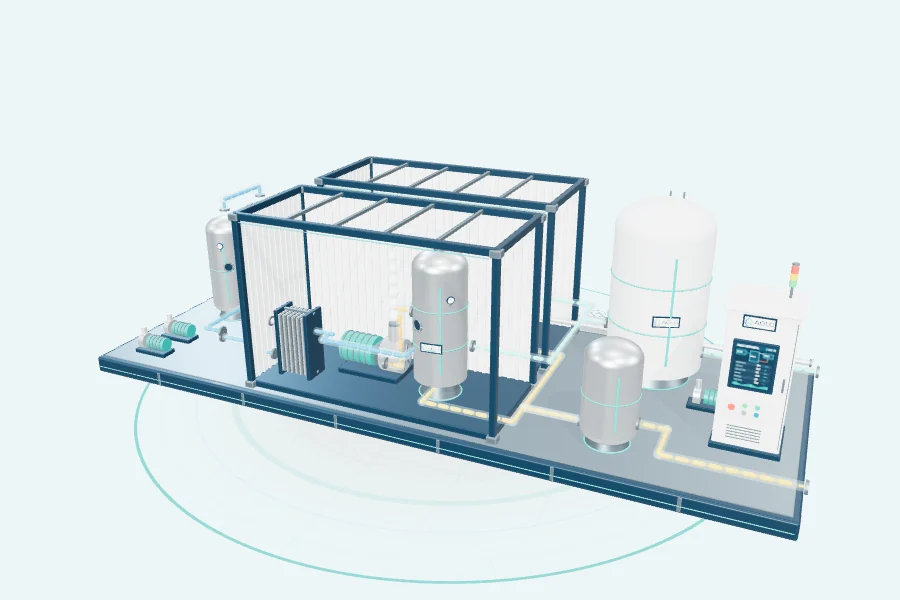
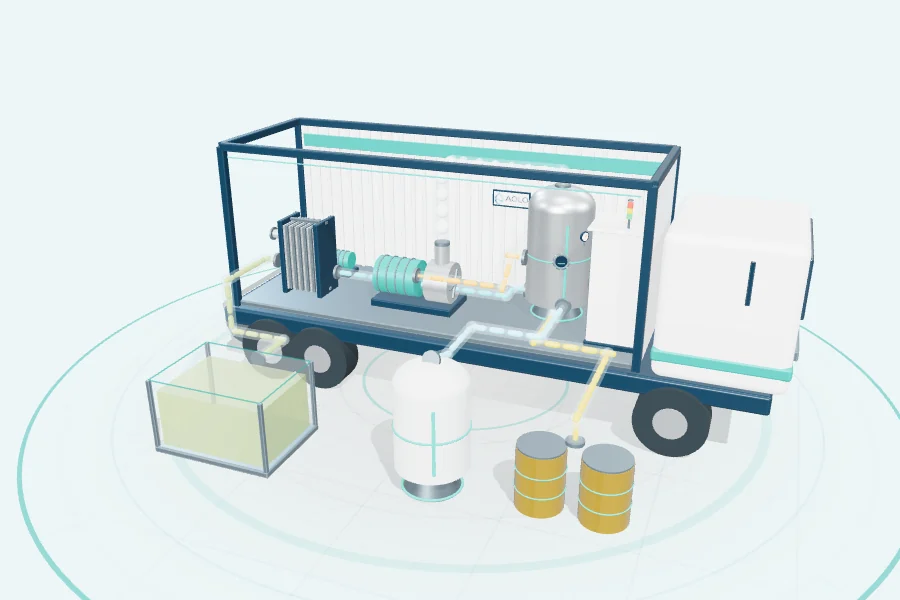
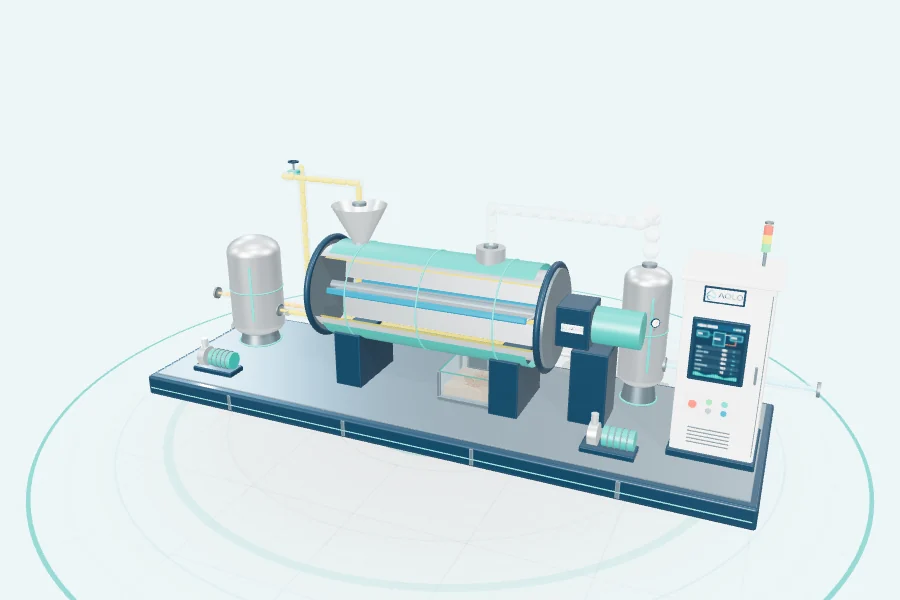
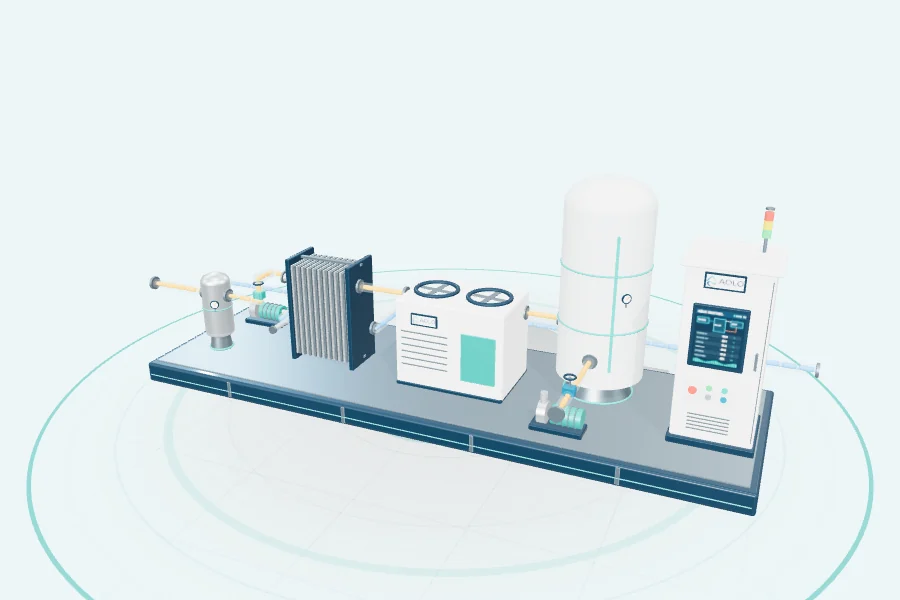
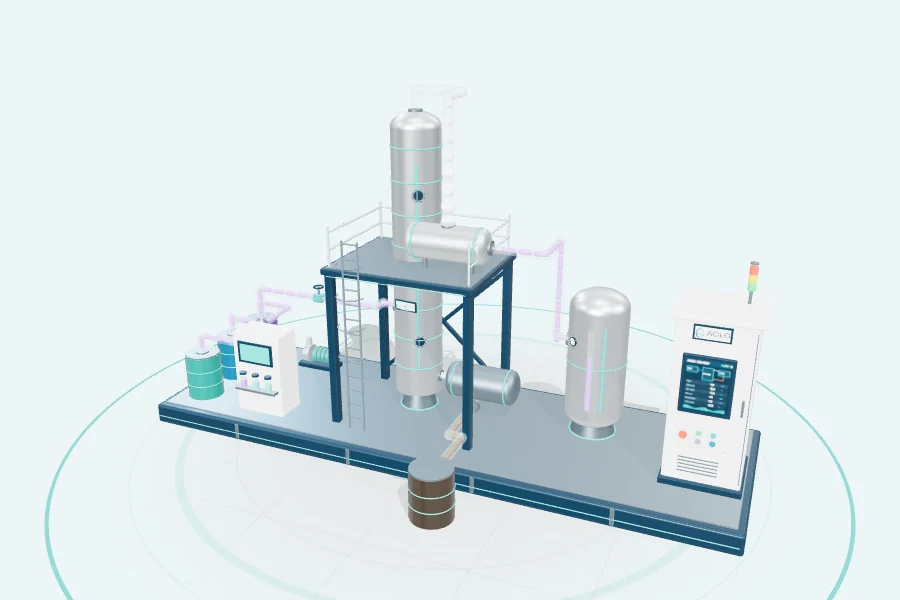
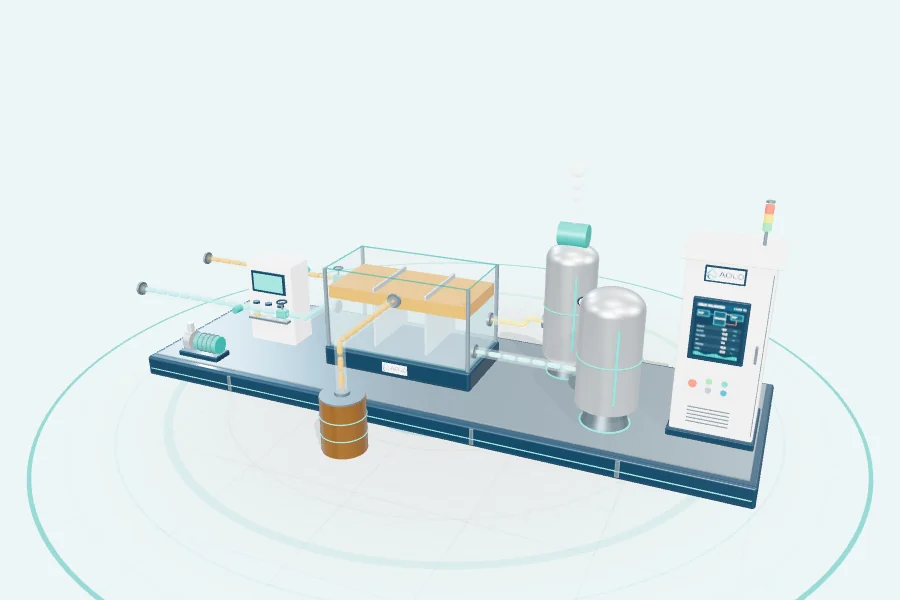
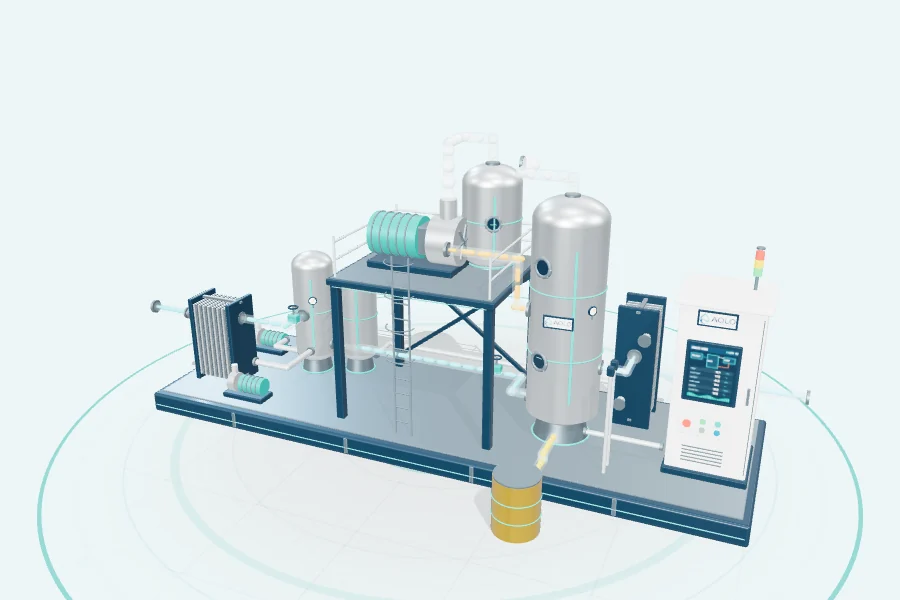
When dissolved salts or organics must be separated from water, evaporation splits the feed into two streams: condensate and concentrate. A mechanical vapor recompression (MVR) evaporator compresses the vapor it generates and uses it again as the heating source, so the process relies mainly on electricity rather than a continuous supply of fresh steam.
Highlights
- Compressor reuses the vapor's latent heat — no continuous supply of fresh steam
- Heat-exchanger design and fouling control for stable, efficient operation
- Fully automated with remote monitoring
- Containerized 20 ft modules that can run in parallel to scale capacity
- No chemicals or consumables needed for desalination
How it works
- 01Feed and preheat
Feed liquid is preheated, typically using heat from the outgoing condensate.
- 02Evaporate
In the evaporator body the liquid boils on the heat-exchange surface, releasing vapor.
- 03Recompress
A compressor raises the vapor's pressure and temperature so it can heat the next portion of feed.
- 04Separate the outputs
Condensed vapor leaves as condensate for reuse; the concentrate is drawn off for further treatment or drying.
Typical applications
- Wastewater volume reduction before off-site disposal
- Concentration of process liquids and recovery of reusable water
- Electroplating, PCB and electronics rinse water
- Chemical, textile dyeing and printing effluents
- Food, beverage and fermentation process streams
What to evaluate
- Feed composition: salts, organics, volatile components and scaling or foaming tendency
- Daily volume, its variation, and continuous or batch operation
- Condensate quality required at its next point of use
- Target concentration and the route for the concentrate
- Available electrical capacity, footprint and maintenance access
Benefit example
- Treatment capacity
- 10 t/day
- Concentrated to
- 20%
- Power use
- 53 kWh/t
- Water recovered
- 92.5%
- Residue left per tonne of waste
- 0.075 t
Calculation example; actual results depend on feed composition and operating conditions.
Figures are typical values; actual performance depends on feed composition and operating conditions.