Equipment
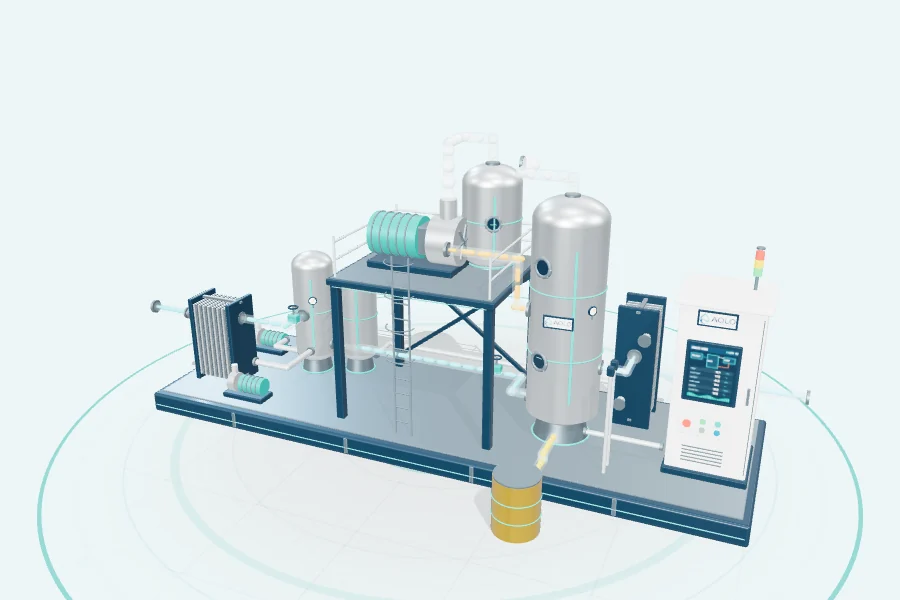
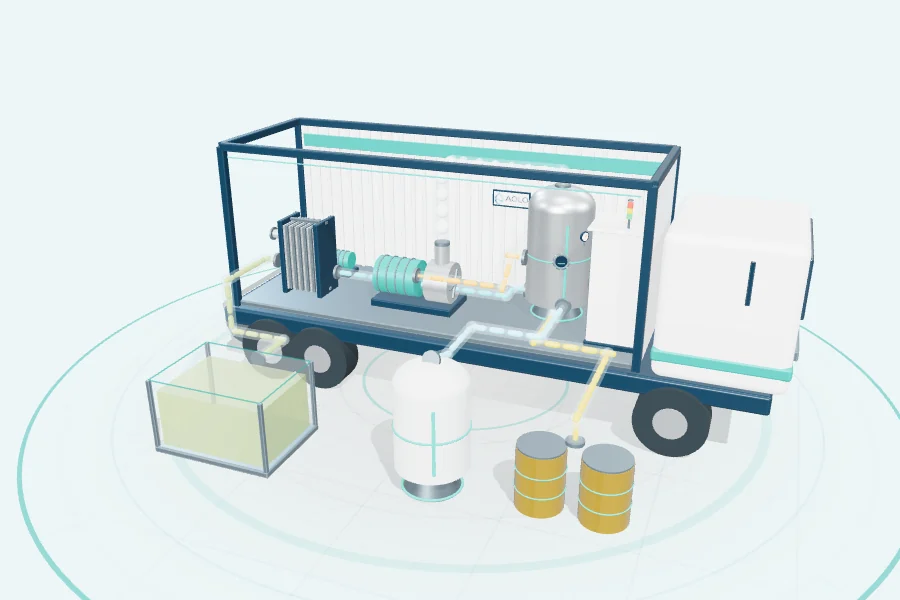
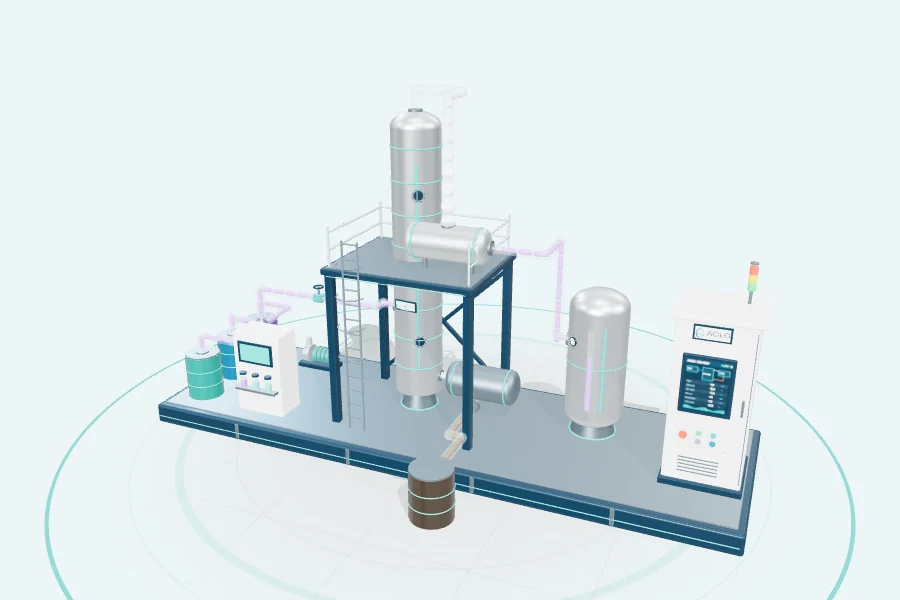
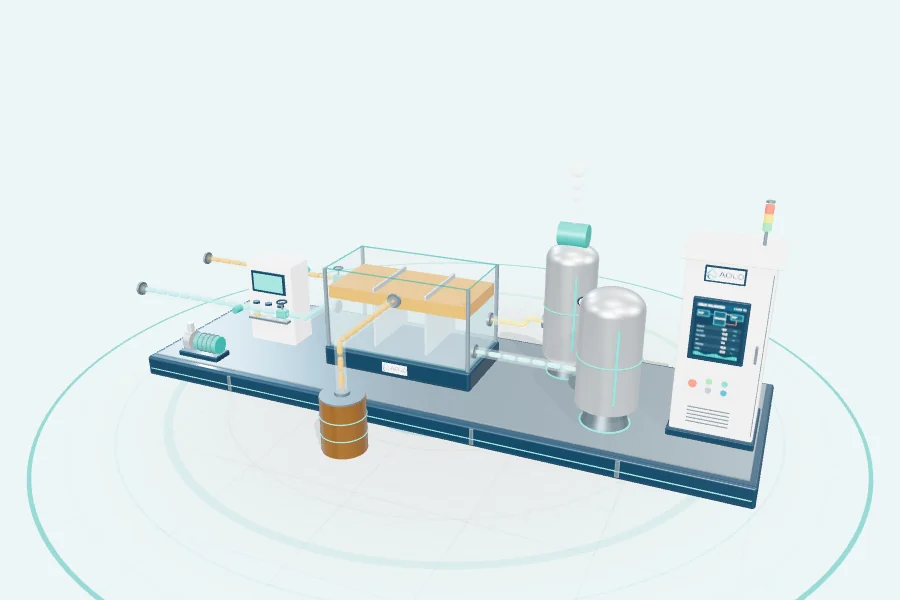
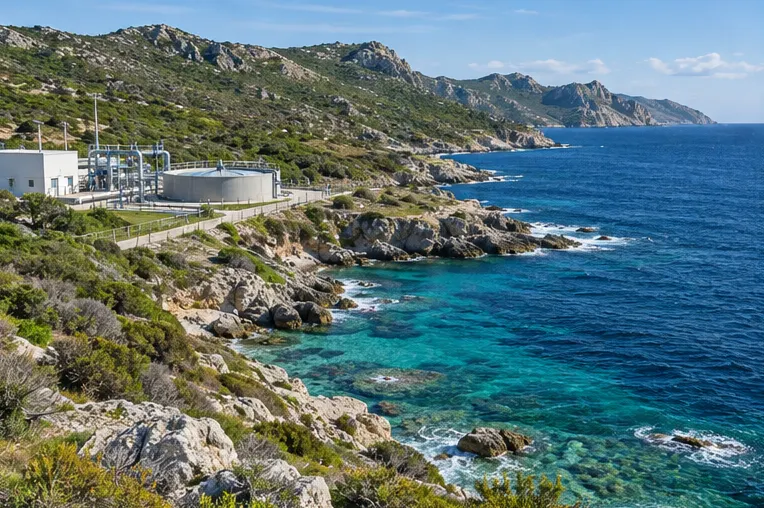
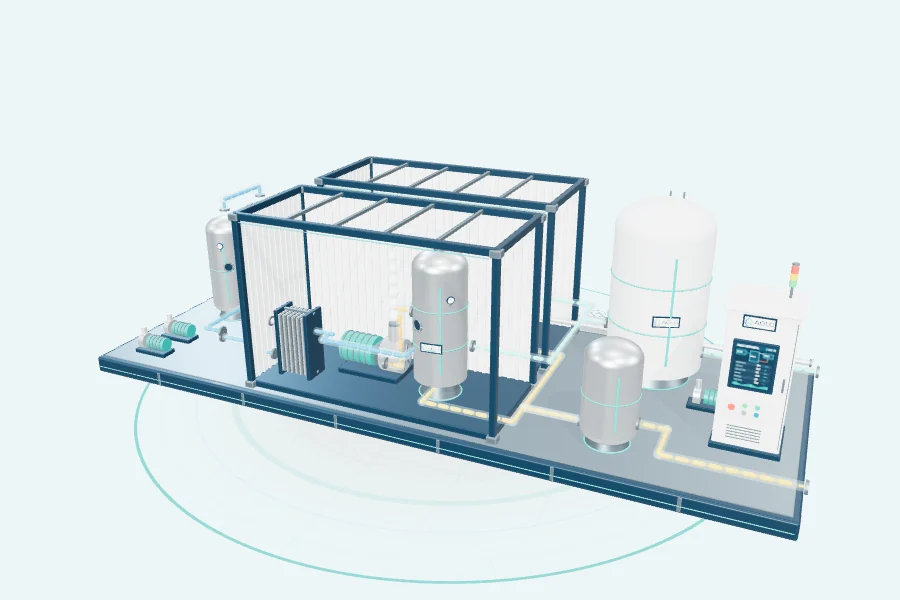
For coastal plants, islands and port facilities that need a steady freshwater supply, an MVR desalination plant evaporates pretreated seawater and condenses the vapor into freshwater, leaving a concentrated brine for separate handling. The vapor is recompressed and reused as the heating source, so the plant runs mainly on electricity, without chemicals or consumables for the desalination step. Capacity is built up from 20 ft containerized MVR modules running in parallel.
Highlights
- Compressor reuses the vapor's latent heat — no continuous supply of fresh steam
- No chemicals or consumables needed for desalination
- Capacity scales by adding 20 ft modules in parallel
- Fully automated with remote monitoring
- Heat-exchanger design and fouling control for stable, efficient operation
How it works
- 01Intake and pretreatment
Intake pumps draw seawater, and filters remove sand and suspended solids before it enters the modules.
- 02Preheat
Plate heat exchangers warm the incoming seawater using heat from the outgoing freshwater and brine.
- 03Evaporate and recompress
Seawater boils on the heat-exchange surface; the compressor raises the vapor's pressure and temperature so it can heat the next portion of seawater.
- 04Freshwater and brine
Condensed vapor is collected as freshwater in the storage tank; the brine is discharged along the route planned for the site.
Typical applications
- Process and boiler make-up water for coastal plants
- Freshwater supply for islands and remote coastal communities
- Ports, fishing harbours and offshore facilities
- Backup or temporary freshwater during droughts
- Sites that want to avoid managing chemicals and membrane consumables
What to evaluate
- Seawater quality at the intake: salinity, suspended solids, temperature and seasonal changes
- Average and peak daily freshwater demand, and storage capacity
- Required quality at the point of use (drinking, process or boiler water standards to be confirmed separately)
- Brine discharge or reuse route and the local regulations that apply
- Available power, installation space and protection against salt-laden air
Figures are typical values; actual performance depends on feed composition and operating conditions.