Process applications
Wastewater containing Turkey-red oil (sulfonated castor oil) can come from spent process baths and from equipment cleaning. When the two are mixed, the daily total hides which batches could be recovered. Recording each source separately is the starting point.
Highlights
- Process flow designed around the source and emulsion behaviour
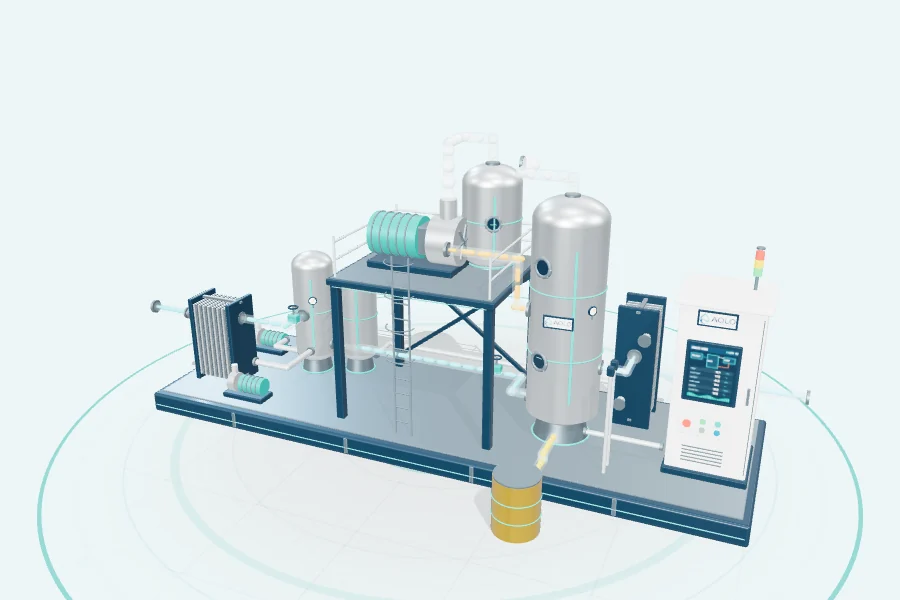
- MVR evaporation concentrates the remaining stream
- Separated oil, treated water and residue each have a defined route
How it works
- 01Sample by source
Take representative samples from process baths and from wash water separately.
- 02Characterise
Assess oil content, emulsion stability, organics and salts.
- 03Choose the path
Evaluate segregation, oil–water separation, or evaporation and concentration.
- 04Plan the outputs
Define where the oil phase, treated water and residues will go.
Typical applications
- Textile dyeing and finishing
- Leather processing
- Metalworking and lubricant formulations
- Wash water from oil-handling equipment
What to evaluate
- Oil formulation and product sheet
- Degree of emulsification
- Discharge timing and batch pattern
- Reuse or discharge requirements
- Route for the separated oil and residues
Figures are typical values; actual performance depends on feed composition and operating conditions.