Equipment
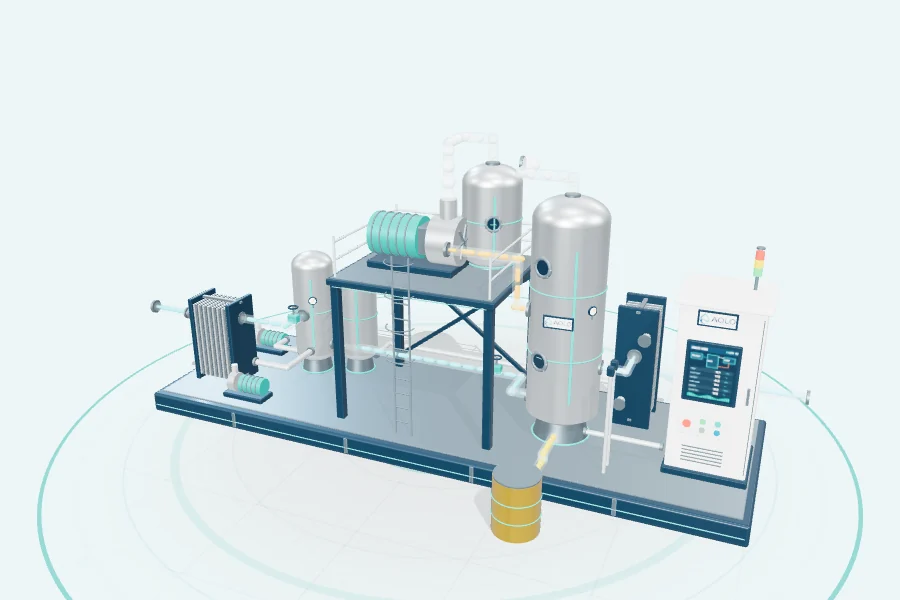
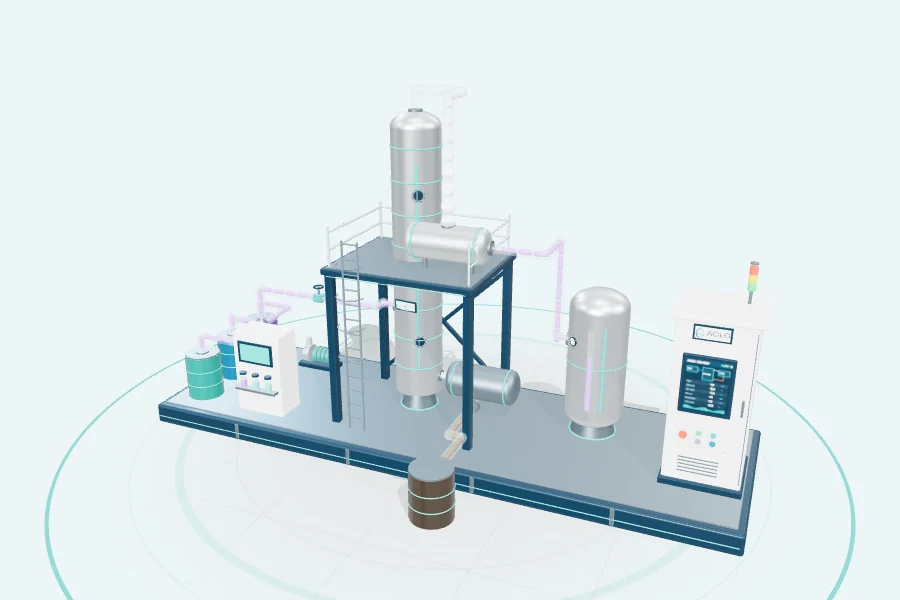
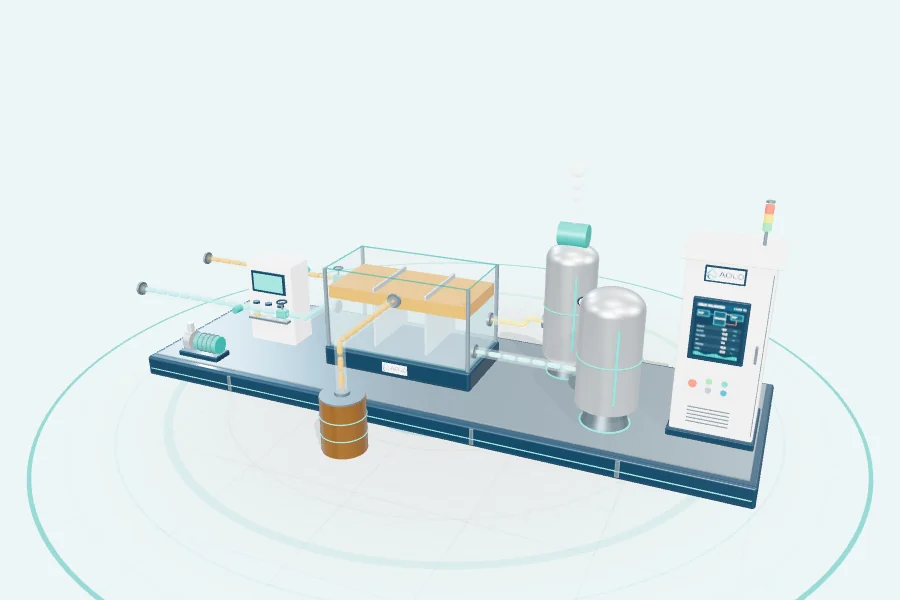
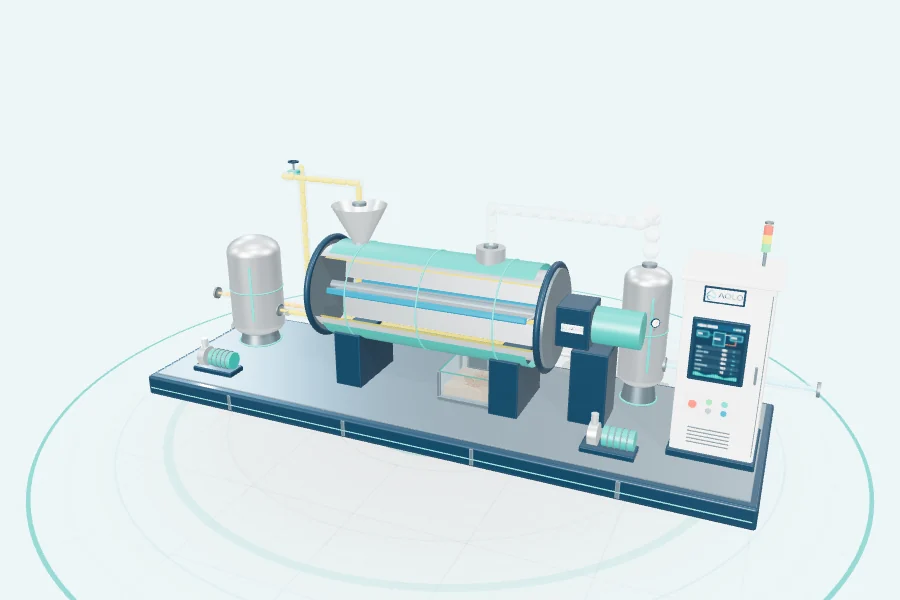
After evaporation, a concentrated liquid may still be costly to store, transport or hand over for disposal. A scraped-surface dryer keeps the material moving across a heated wall with rotating blades, removing more water and leaving a residue that is easier to package and send to a receiving facility.
50–1,000 L/hThroughput
≈ 10%Moisture of dried solids
1.2 tSteam per tonne of water removed
80%Lower outsourced disposal cost (up to)
Highlights
- Concentrate-then-dry: pairs with MVR evaporation for zero liquid discharge
- Electric drive with steam heating
- Scraper blades keep a thin, moving film to prevent sticking
- Dried solids are easier to package and hand over
How it works
- 01Receive concentrate
Concentrate from an evaporator or process tank is fed in batches or continuously.
- 02Heat in a thin layer
Rotating scraper blades spread the material across the heated surface and keep it from sticking.
- 03Remove vapor
Evaporated moisture is drawn off and can be condensed and recovered.
- 04Discharge solids
The dried residue is discharged for packing and handover to the receiving facility.
Typical applications
- Evaporator concentrate in zero-liquid-discharge schemes
- Electroless nickel and other plating concentrates
- Chemical and agrochemical production residues
- Small, high-strength streams that are costly to haul as liquid
What to evaluate
- Behaviour of the material when heated: stickiness, foaming, crusting
- Residual moisture and form the receiving facility will accept
- Batch size and frequency
- Heat source available on site: electricity, steam or thermal oil
- Handling of vapor and odour
Figures are typical values; actual performance depends on feed composition and operating conditions.