Process applications
Spent solvent from cleaning or line changes can often go back into production, provided it meets the composition and water content the next batch requires. Recovery is planned backwards from that requirement.
80–97.5%Lower distillation cost with MVR
Highlights
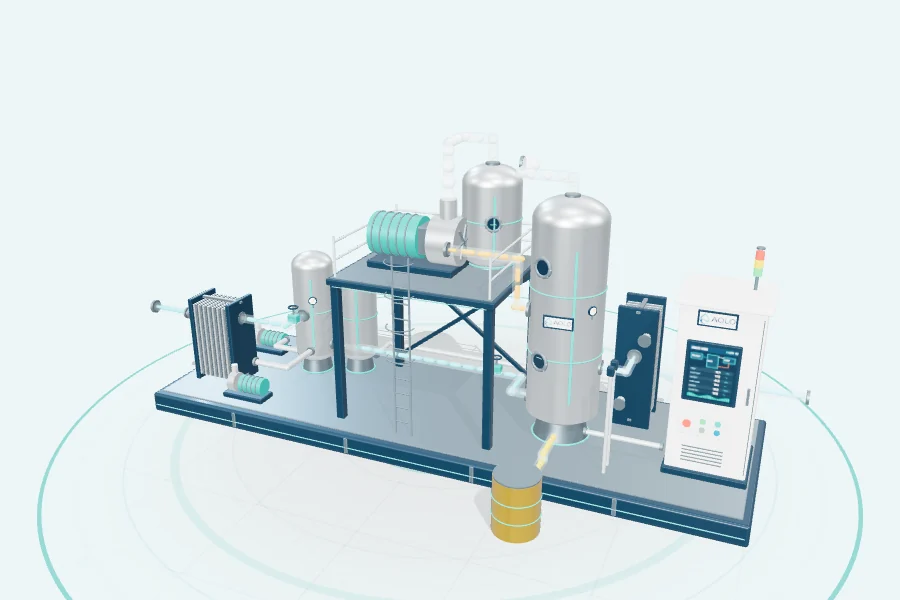
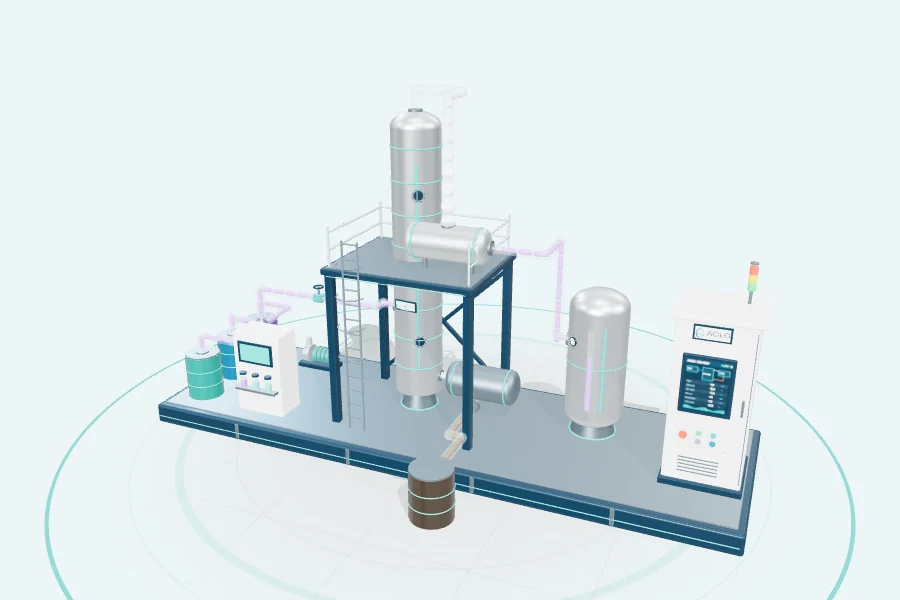
- MVR distillation reuses the vapor's heat to recover solvent
- Addresses the high cost of conventional solvent disposal and treatment
- Integrates segregation, analysis and distillation in one route
How it works
- 01Segregate and identify
Collect spent solvent by source so each batch's composition is known.
- 02Analyse
Check composition, water content and contaminants against the reuse specification.
- 03Separate
Distillation or other separation methods are evaluated to reach the target quality.
- 04Verify and return
Test the recovered solvent before it goes back to production; residues go to proper disposal.
Typical applications
- Cleaning solvents in printing, coating and electronics
- Line-change and flushing solvents
- Single-component solvents collected separately
- Mixed solvents with identified components
What to evaluate
- Solvent identity and safety data sheets
- Mixtures, azeotropes and water content
- Contaminants such as resins, pigments or salts
- Batch volume and frequency
- Safety requirements for flammable materials
Figures are typical values; actual performance depends on feed composition and operating conditions.